December ‘25 Pick
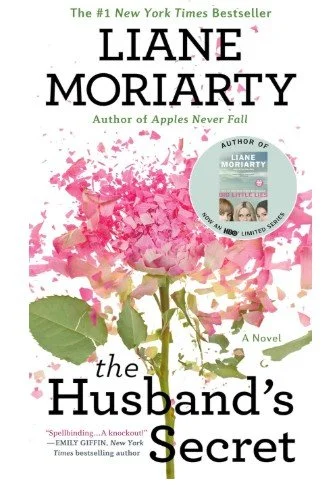
Book Recap: The Husband’s Secret by Liane Moriarty
A gripping, character-driven novel that unravels what happens when an ordinary woman discovers a sealed letter from her husband marked “To be opened only in the event of my death.” Inside is a confession that shatters everything she thought she knew—pulling her, and two other women whose lives unexpectedly intersect with hers, into a web of guilt, loyalty, and long-buried secrets. The story is intriguing because it explores the private corners of marriage, the weight of impossible choices, and the ripple effects one secret can have on multiple families. With Moriarty’s signature blend of sharp observations, emotional tension, and slow-building suspense, the book keeps you questioning what you would do if faced with a truth that could destroy the life you built.
Get The Husband’s Secret here:
Week 4 Discussion Questions (Chapters 43–59)
1. By the end of the book, every character has been changed by the truth—or the withholding of it.
Which character do you think paid the highest price for the secret, and was that cost fair?
Did the outcome feel like justice, consequence, or something more complicated?
2. The novel ultimately asks whether knowing the truth is always better than living without it.
After finishing the book, where do you stand on this question?
Did the ending challenge your beliefs about honesty, forgiveness, or protection?
3. Several characters are forced to confront versions of themselves they may not like.
Who experienced the most meaningful internal shift by the end of the story?
Do you believe that change was permanent—or simply situational?
4. Marriage, loyalty, and trust are tested in irreversible ways.
After seeing how everything unfolds, what do you think the book is really saying about marriage?
Is love enough to survive the truth, or are there some things that permanently alter a relationship?
5. Looking at the ending as a whole, did it feel hopeful, unsettling, realistic—or all three?
What emotion did you sit with after turning the final page?
If the story continued five years into the future, which character would you most want to check in on—and why?
Week 3 Discussion Questions (Chapters 28–42)
1. These chapters explore the emotional weight that comes with knowing the truth.
How does the burden of responsibility shift in this section, and which character seems to struggle with it the most?
Do you feel their reaction is justified—or driven by fear?
2. Moral boundaries become much blurrier in Chapters 28–42.
Which moment made you question what you would do in a similar situation?
Do you think morality is absolute in this story, or does context change everything?
3. Several characters begin making decisions driven more by emotion than logic.
Whose choices felt the most understandable to you—and whose felt the most dangerous?
Are they acting out of love, guilt, self-protection, or something else?
4. Relationships continue to evolve under pressure.
Which relationship in these chapters reveals the most about loyalty and the limits of forgiveness?
Did anything shift your empathy or change whose side you’re on?
5. The tension in this section raises the question of whether the truth heals or harms.
Do you think revealing the truth would make things better at this point—or would it cause more destruction?
What does this section suggest about the power of secrets in holding families together… or tearing them apart?
Week 2 Discussion Questions (Chapters 14–27)
1. At this point in the book, secrets are no longer abstract—they’re beginning to feel dangerous.
How does the tension around revealing vs. protecting the truth evolve in these chapters?
Do you think some secrets are justified if they preserve stability, or is honesty always the moral choice?
2. Cecilia believes deeply in doing “the right thing.”
In Chapters 14–27, do her actions align with her values, or do you see cracks forming?
At this stage, do you trust her judgment—or are her good intentions starting to feel risky?
3. The ripple effect of past actions becomes clearer in this section.
Which moment best shows how one choice made years ago continues to shape multiple lives?
Did this change your perspective on blame or responsibility?
4. Moriarty presents marriage as a complex mix of love, loyalty, and self-preservation.
Based on these chapters, where do you think the line is between protecting your spouse and protecting yourself?
Is that line different for different people—or should it be universal?
5. Empathy becomes complicated as we learn more about the characters’ inner lives.
Which character surprised you the most in Chapters 14–27, either positively or negatively?
Did finding out more about them make you more understanding—or more conflicted?
Week 1 Discussion Questions (Chapters 1–13)
1. Do secrets belong in a marriage?
After seeing how Cecilia wrestles with the unopened letter, what do you think Moriarty is saying about trust and boundaries in long-term relationships?
Is keeping a secret ever the right choice — or is the silence more damaging than the truth?
2. How do guilt and invisible emotional burdens shape the characters?
Chapters 1–13 show Rachel carrying a deep grief, Tess feeling betrayed in an unexpected way, and Cecilia feeling unsettled by the letter.
How does Moriarty highlight the emotional weight each woman carries in private — and in what ways do their burdens start to shape their actions?
3. What do the early chapters suggest about how well we truly know the people closest to us?
The novel repeatedly challenges the idea that we understand our partners, children, and friends.
Which moments in the first 13 chapters made you question how much these women actually know about the people in their lives?
4. How do the three women’s stories begin to echo or mirror one another?
Even before their lives intersect, there are parallels in their emotional journeys — betrayal, uncertainty, grief, and the feeling that a “normal” life can shift instantly.
What similarities did you notice between the women so far, and what do you think Moriarty is setting up through these early parallels?
5. How would you handle the letter?
If you were in Cecilia’s position — discovering a sealed envelope labeled “only open after my death” — would you open it?
Why or why not, and what moral, emotional, or practical factors would influence your decision?